All posts
Building calm real-time UIs with WebSockets and React
11 min read
ReactWebSocketsUX
Connection states, backoff, and UI patterns that keep dashboards readable when the wire is flaky.
Real-time dashboards fail in subtle ways: not when the socket drops, but when the UI panics every reconnect. Calm interfaces encode state explicitly and surface recoverable errors.
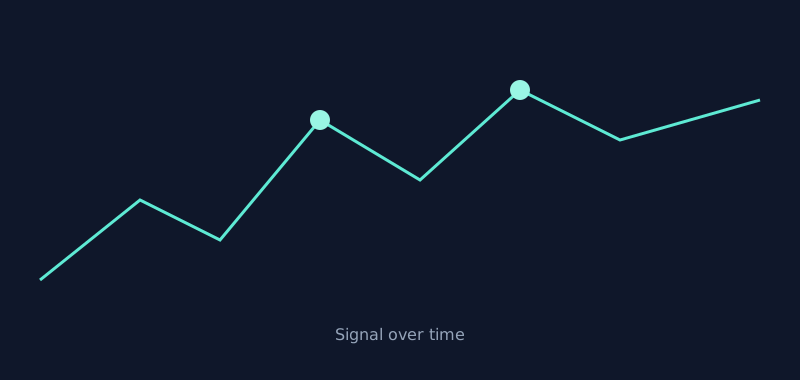
Treat the connection as derived state from a small reducer: idle, connecting, open, backoff, closed. Pair that with a human-readable banner instead of silent failure. See also MDN WebSocket reference for API edge cases.
Backoff and UI copy
- Show last updated at so users trust stale numbers during reconnect.
- Debounce bursty messages; batch DOM updates where possible.
- Prefer explicit unsubscribe in StrictMode-friendly effects.
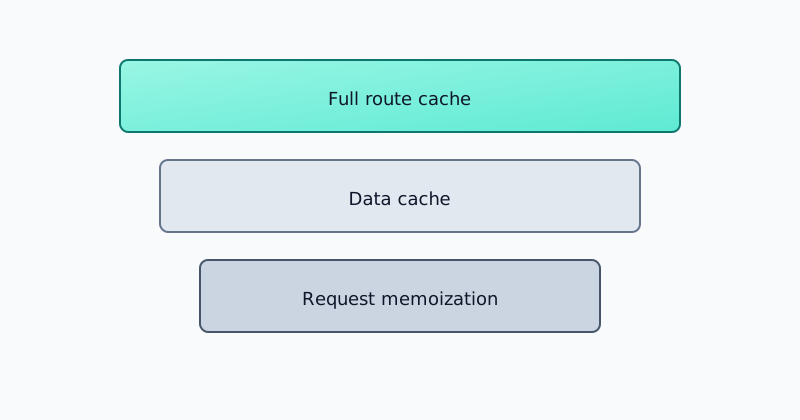
When latency spikes, shed work before you shed users: sample expensive charts, collapse side panels, and keep primary KPIs on screen. Internal doc example: /design/realtime-states (placeholder internal link).
- Heartbeats: cheap pings prove liveness without spamming business events.
- Version your payloads so mixed deployments do not deserialize blindly.